

- 25 Sep, 2026
What Is Shaping Electric Truck Adoption In India In 2026
Table of Contents
Introduction
Electric trucks are gradually becoming part of everyday freight operations across India. While adoption is still at an early stage, stronger vehicle offerings, expanding charging infrastructure and growing operational experience are giving fleet operators more real-world data than ever before. Instead of relying on projections, businesses can now assess how an electric truck performs in different applications and where it is beginning to fit within commercial fleets.
What is driving electric truck adoption?
EV adoption overall, is being influenced by several developments happening together rather than a single factor. The availability of new electric commercial vehicles and operational learnings from early deployments are helping fleet operators better understand where an electric load vehicle can fit within their operations. As more real-world experience becomes available, businesses have greater visibility into the applications where electrification is currently practical.
Source: Ministry of Heavy Industries – PM E-DRIVE Scheme; Ministry of Power – EV Charging Guidelines; NITI Aayog EV initiatives.
Government initiatives, state-level policies and pilot projects continue to support this transition, but adoption ultimately depends on whether an electric truck matches a fleet's daily duty cycle. Vehicles operating on predictable routes with regular opportunities for charging are currently seeing the strongest business case, while long-haul applications continue to be evaluated through dedicated freight corridor pilots.
As charging infrastructure develops and operators gain more operational experience, electric commercial vehicles are expected to become a practical option for a wider range of commercial transport applications.
Where adoption stands today
Deployment figures now provide a clearer picture than policy announcements alone. According to VAHAN registration data, electric truck registrations increased from 224 units in 2024 to 573 units in 2025, taking cumulative deployment beyond 1,100 vehicles nationwide.
Source: VAHAN Dashboard / Ministry of Road Transport & Highways (registration data).
While this represents strong year-on-year growth, electric trucks still account for only a small proportion of India's commercial vehicle fleet. The market remains in its early stages, with adoption concentrated in industrial states where freight demand and supporting infrastructure are strongest. Maharashtra alone accounts for almost 30% of deployments, highlighting how regional infrastructure continues to influence purchasing decisions.
Freight corridors: the next phase of charging
Depot charging remains the primary charging model for electric trucks, particularly for vehicles operating on predictable daily routes. At the same time, longer-distance charging is beginning to develop through dedicated freight corridor pilots.
Projects on the Delhi–Jaipur and Bengaluru–Chennai corridors are testing heavy electric trucks over intercity routes while collecting operational data on charging, utilisation and vehicle performance. Commercial charging infrastructure is also expanding along corridors such as the Mumbai–Pune Expressway.
Alongside these pilots, the National EV Highway Guidance Framework has identified 20 priority freight corridors for electrification by 2027. Government guidelines for public charging infrastructure are also encouraging investment in charging stations at logistics hubs, depots and highway rest areas.
Source: National EV Highway Guidance Framework; Ministry of Power – Guidelines for Installation and Operation of EV Charging Infrastructure.
These initiatives do not mean nationwide highway charging is already available. Most remain pilot programmes designed to evaluate operational performance. Even so, they indicate a gradual shift from a depot-only charging model towards a broader charging ecosystem for commercial freight.
Where do Eicher’s electric trucks fit in this?
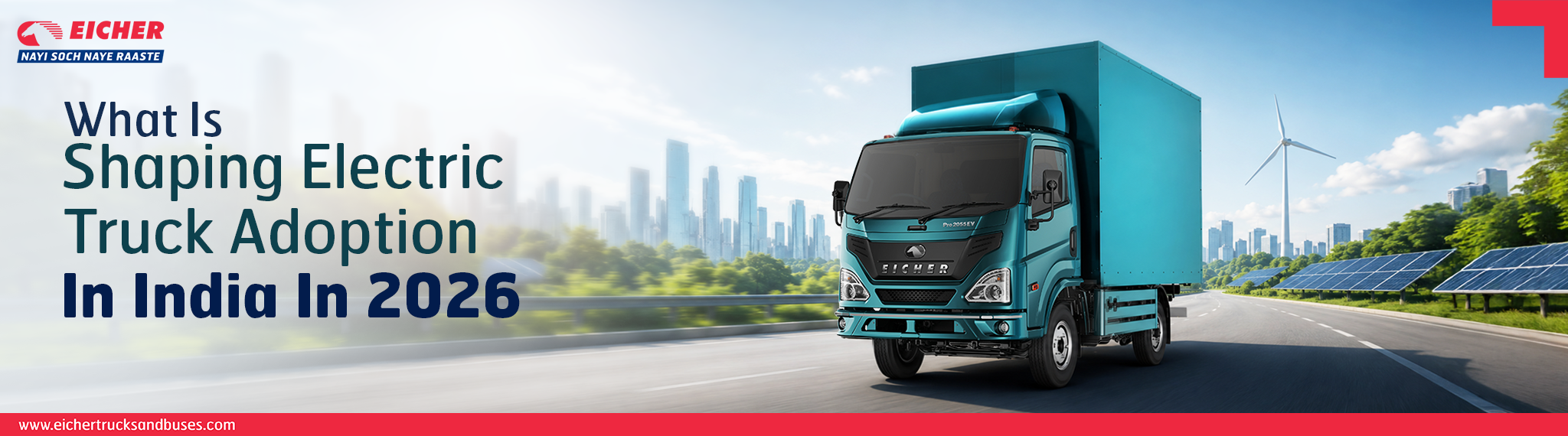
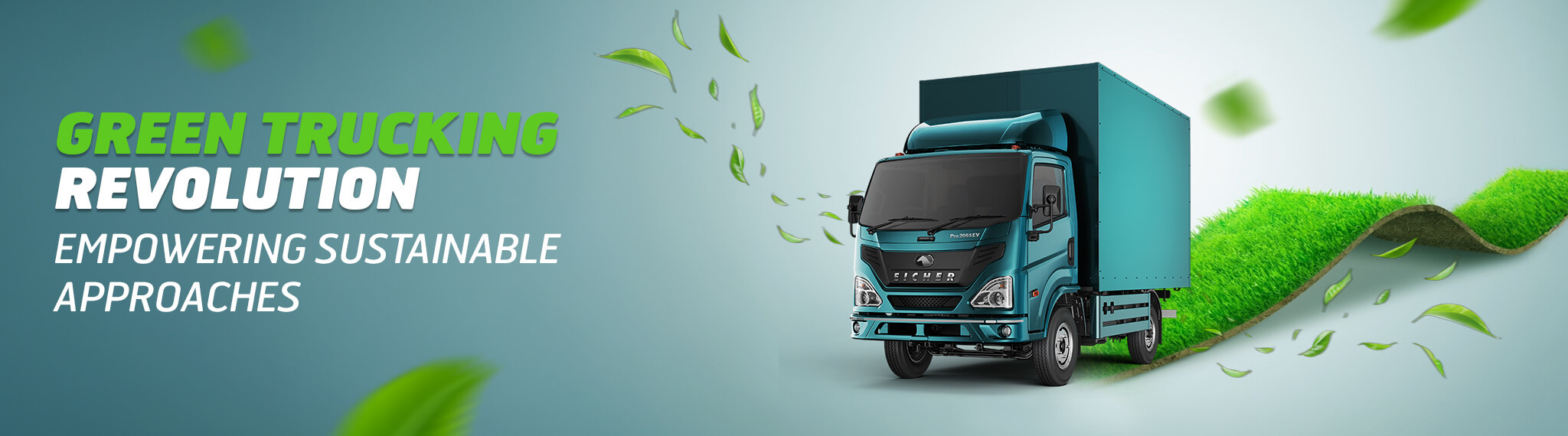
Eicher’s electric vehicle for this segment, the Eicher Pro 2055 EV, is designed for urban and regional operations rather than long-haul freight. Its 5.5-tonne GVW, 64.4 kWh battery and ARAI-certified range of up to 162 km make it well suited to predictable routes where vehicles can return to a depot for scheduled charging.
This positioning aligns with today's charging infrastructure, which is still centred on depot operations. As highway charging networks continue to mature, vehicles designed for shorter, repeatable routes remain a practical starting point for many fleet operators considering electrification.
What this means for fleet operators
The commercial EV market in 2026 is more mature than it was a year ago. The extension of the PM E-DRIVE scheme provides a longer planning window for eligible purchases, while increasing deployment figures offer additional insight into how electric trucks are being adopted across different freight applications.
Fleet operators evaluating an electric truck should also consider route profiles, charging availability and the overall electric truck price in India alongside vehicle capability and operating requirements. Charging infrastructure continues to develop, particularly for long-haul operations, making route selection an important part of any electrification strategy. For operators with predictable daily routes and suitable depot charging, electric trucks are becoming an increasingly viable option as policy support and infrastructure continue to evolve.
Source: PM E-DRIVE Scheme notification.
Explore the Eicher Pro 2055 EV
Discover how the Eicher Pro 2055 EV supports efficient urban freight operations by exploring the official product page.
1.jpg)
1.jpg)





.jpg)








.jpg)