

- 07 Aug, 2026
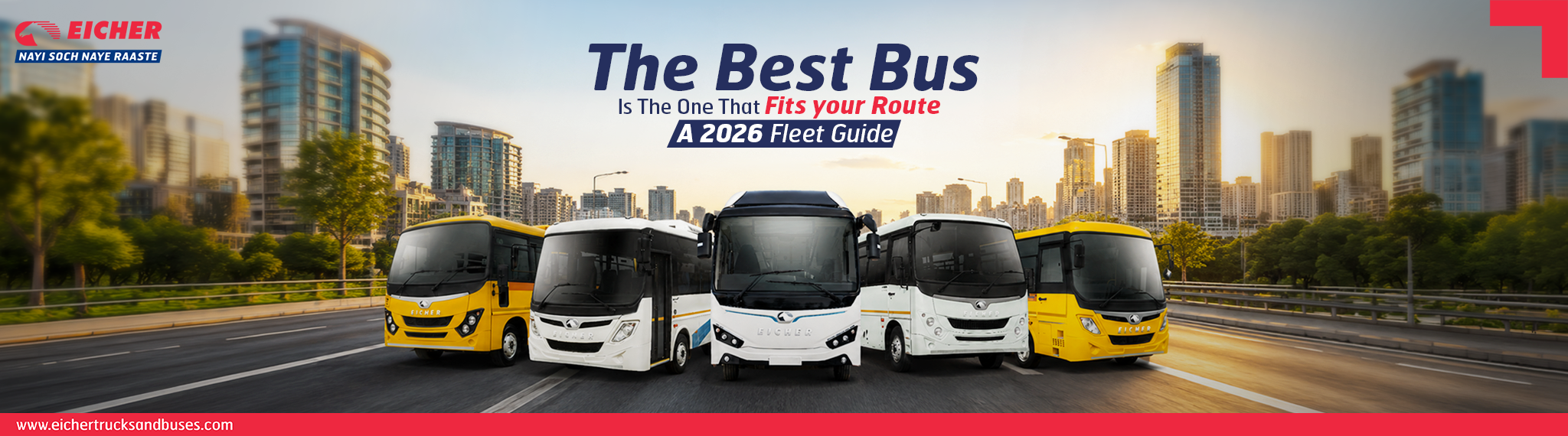
Which Bus Will Work Hardest for Your Business? A Buyer’s Guide for 2026
When your bus breaks down mid-route, you are not dealing with only a repair bill. You may also have stranded passengers, a missed school run, or a corporate client asking why employees are late.
As a fleet operator, you need a bus that keeps passengers comfortable while supporting reliable, cost-efficient operations. Your routes, terrain and passenger requirements will all influence the right choice. Checking for the bus prices in India is an obvious starting point when you begin comparing options, but daily profitability will also depend on fuel efficiency, maintenance, uptime and service support.
What to assess before choosing a bus
Start with the route and passenger requirement
The work your bus performs should guide the configuration you consider. Think about the number of passengers you regularly carry, the distance covered each day, road width, turning conditions, luggage requirements and expected stop frequency. A larger bus may offer more seats, but those additional seats make financial sense only when your routes can fill them consistently.
Fuel efficiency and structural durability
Fuel efficiency is an important operating expense, and actual mileage can vary with passenger load, traffic, terrain, driving behaviour, air-conditioning use and maintenance.
When comparing vehicles, review the engine and torque specifications, suspension, chassis construction, service intervals and corrosion-protection details published for the exact model. Ask the dealer to explain how these features relate to your operating conditions rather than assuming that one specification suits every route.
Driver comfort and passenger experience
Your driver spends an entire shift behind the wheel. A well-designed driving position, power steering, manageable Noise, Vibration and Harshness (NVH) levels and clear visibility can reduce physical strain during repeated or long-distance journeys.
For passengers, seat layout, available legroom, suspension and air-conditioning matter differently across school, staff and intercity operations. The right balance depends on who is travelling and how long they will remain on board.
Review safety and connected-vehicle features
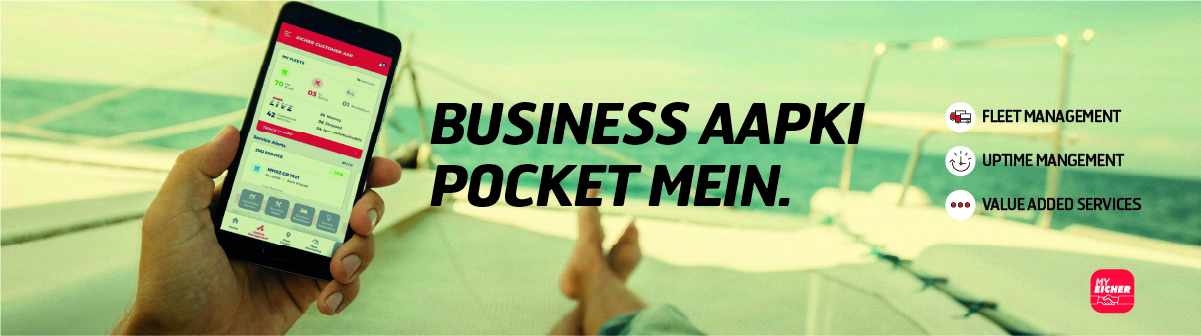
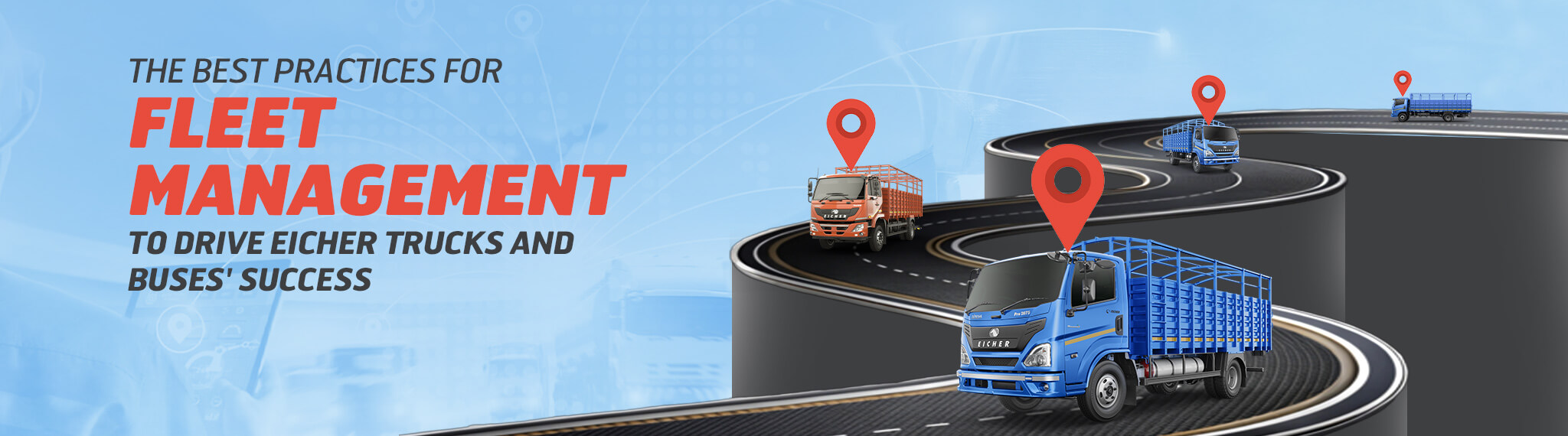
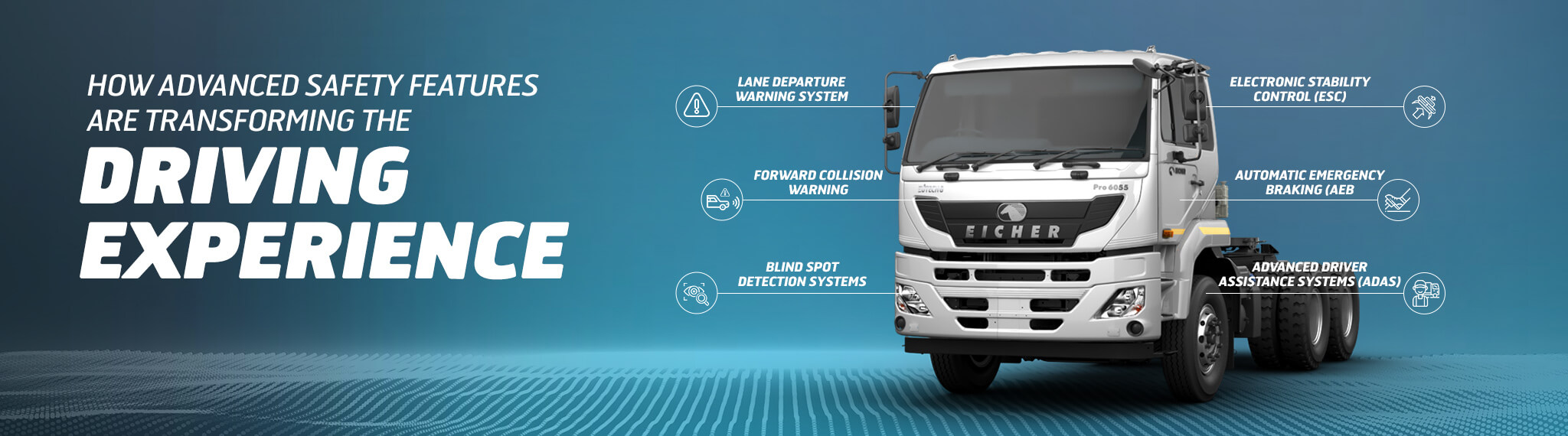
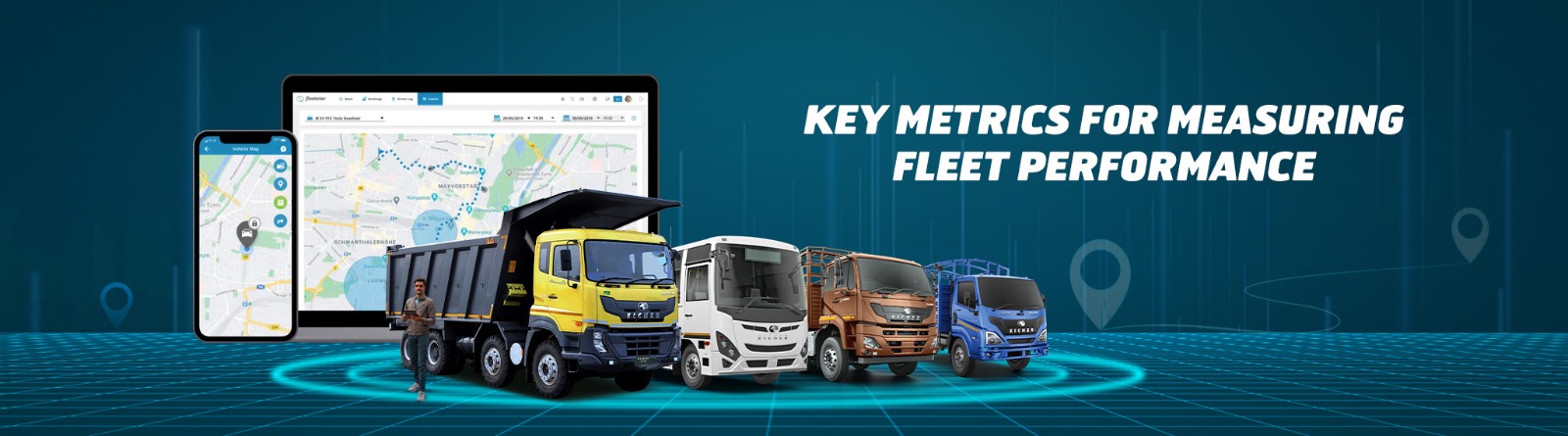
Compare the braking system, emergency exits, seat belts, body construction and other safety equipment provided on the exact variant. Do not assume that every feature is standard across an entire product range. Connected platforms can also help fleet managers monitor vehicle utilisation, fuel and maintenance. Eicher’s My Eicher platform, for example, provides fleet, fuel, and uptime management functions.
Eicher bus models for different fleet needs
| Model | Primary Application | Published Seating Configurations | Powertrain and Key Specification | Pricing |
|---|---|---|---|---|
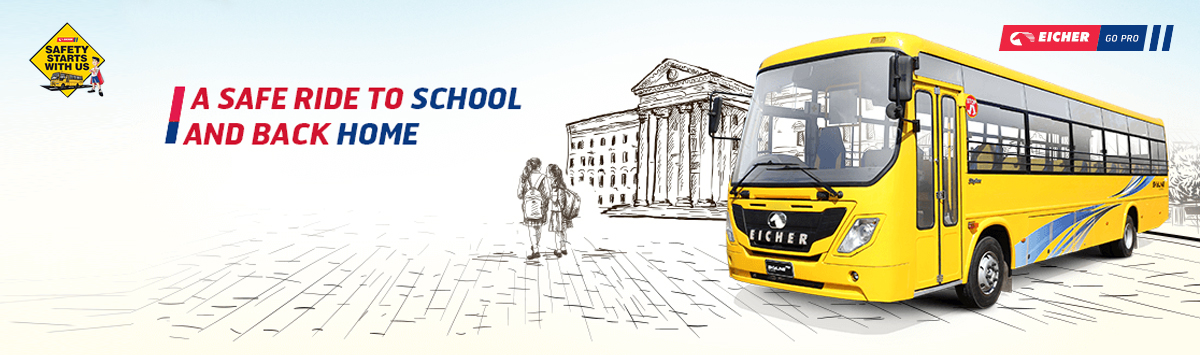
| Eicher Starline Next 2065 E | School transport |
25+CD+D in 2*2 layout or 30+CD+D in 3*2 layout |
Diesel E366 engine 75 kW power 285 Nm torque |
Get Quote |
| Eicher Skyline Pro Next 3010 L AC | Air-conditioned staff transport |
44+D HHR in 2*2 layout 40+D PB in 2*2 layout or 31+D PB in 2*1 layout |
Diesel E494 engine 120 kW power 500 Nm torque |
Get Quote |
| Eicher Skyline Pro-E 13.5 m Intercity | Intercity seater or sleeper operation |
36+D sleeper in 2*1 layout or 52+D seater in 2*2 layout |
Electric 235 kW power 399.36 kWh battery |
Get Quote |
*Note: D refers to the driver and CD to the co-driver. Seating can change with the selected layout and body configuration. Eicher’s public model pages do not provide directly comparable mileage figures for these buses. Diesel mileage and electric energy consumption should therefore be evaluated through written dealer information and a route-specific trial under representative passenger loads.
What shapes bus purchase and ownership cost
Why two buses with similar seating can have different prices
The purchase cost of a bus is influenced by the exact chassis, engine or electric powertrain, seating layout, body configuration, air-conditioning, suspension, safety equipment and other selected features.
There is no single price that applies across every bus category. For example, someone searching for the 50-seater bus price in India must consider the exact model, seating layout, body configuration, powertrain and comfort features. A tourist bus price may include additions such as air conditioning, luggage space or premium seating.
When asking for a price, confirm whether the quotation is for:
- A chassis or a fully built bus
- An ex-showroom or on-road amount
- An air-conditioned or non-air-conditioned configuration
- A specific seating layout
- Registration, insurance and applicable taxes
- A charger and charging infrastructure, where relevant
Looking beyond the initial quotation
The purchase price is important, but it is only one part of the financial decision. You may get a more realistic view by calculating Total Cost of Ownership (TCO), including the down payment, Equated Monthly Instalment (EMI), interest, fuel or electricity, maintenance, tyres, insurance, expected utilisation and potential resale value.
This calculation should use your own route and operating assumptions. When researching Eicher’s bus prices in India, treat the quoted amount as a starting point rather than the complete financial picture. A vehicle with a lower purchase price may not necessarily cost less over its working life if it consumes more fuel, carries fewer passengers than required or spends more time unavailable for service.
A practical buying checklist for 2026
Check uptime support and warranty terms
Before choosing a model, review what the warranty covers, how long it applies and which exclusions may affect your operation. Ask about scheduled-maintenance requirements, roadside assistance, service intervals, parts availability and maintenance-contract options.
Map the service network against your routes
Look for authorised workshops along the routes on which the bus will actually operate. Eicher states that its dealer and service network includes touchpoints across major highways and industrial hubs. Its On-Road Service provides 24×7×365 assistance through more than 650 GPS-enabled service vans across India.
Conclusion
The right bus is not necessarily the one with the most seats or the lowest initial quotation. Where possible, request a trial on a route that reflects your actual operation. A school operator may need to assess turning space and frequent stops, while a staff or intercity operator may pay greater attention to passenger comfort, luggage capacity and sustained performance. Ask the dealer to provide a written quotation and clearly state every assumption used in any mileage or TCO calculation.
Comparing exact models and testing them against your own operating conditions will give you a stronger basis for deciding. To review specifications, request quotations or locate a dealer, visit the Eicher Buses product page.
Frequently Asked Questions (FAQs)
1. What determines the price of a new bus in India?
Price varies by model, seating layout, body type, powertrain, comfort features and whether the quote is ex-showroom or on-road. Request a written, model-specific quotation.
2. Does higher seating capacity always mean a higher price?
Not necessarily. Pricing also depends on the chassis, body configuration, air conditioning, safety equipment and powertrain.
3. What affects real-world bus mileage?
Passenger load, traffic, terrain, air-conditioning use, driving style, tyre pressure and maintenance can all affect fuel efficiency.
4. Are electric buses suitable for every fleet?
Suitability depends on route length, charging access, electricity costs and daily utilisation. PM E-DRIVE support should not be assumed to be a direct subsidy for private operators.
5. What should you check in after-sales support?
Check warranty coverage, workshop locations, roadside assistance, parts availability and expected repair turnaround times.
1.jpg)
1.jpg)



.jpg)




.jpg)